THE CHALLENGE
We live in a world that is experiencing multiple overlapping crises. The intergenerational trauma associated with climate change, systemic oppression, and the modern political economy has reached a fever pitch. In order to move forward towards a more connected and relationally oriented future, there are many potential solutions that will have to work together. We believe that a more just and inclusive telling of history is one of them.
THE SOLUTION
By teaching people of all ages how to tell their mothers’ stories, and by teaching mothers to tell their own stories, we can create a new way of seeing our history and society. This approach centers tenderness, compassion, and empathy. Sharing and preserving stories in this way, and teaching others how to do it themselves, is a powerful tool. It can support advocacy, strengthen communities, and help us move toward a more equitable, just, and sustainable future.

NARATIV LISTENING & STORYTELLING METHOD
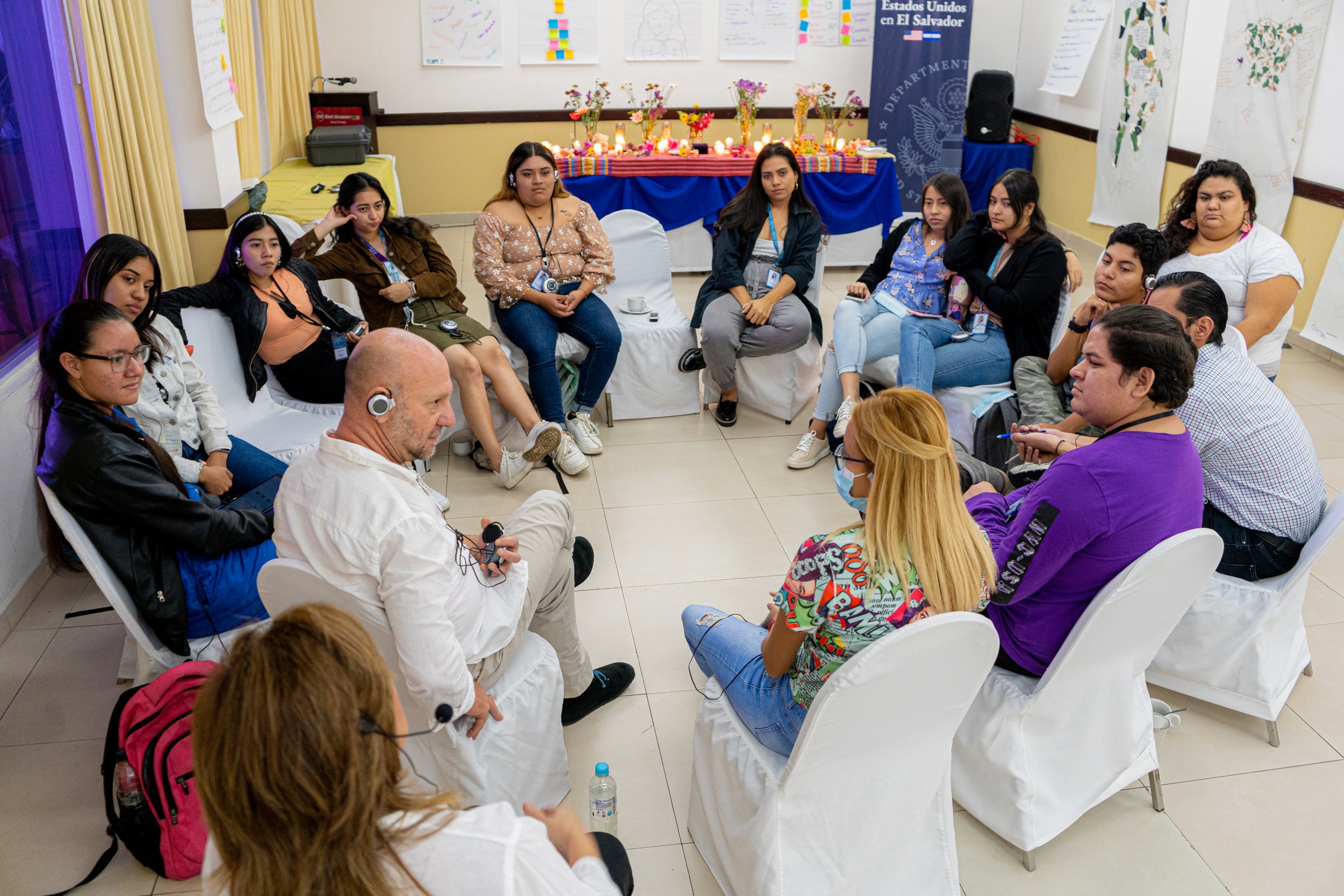
In 1994, Murray Nossel created an original method to teach dying AIDS patients how to listen to and share stories with one another. Left behind as personal legacies, these stories led to a social campaign to advocate for research and services forAIDS patients. Murray then co-founded Narativ,whose mission is to implement the listening and storytelling method in a wide variety of contexts to effect social change. Narativ has since spread its method internationally, working with organizations such as Open Society Foundations and UNICEF.
INTEGRATION OF LISTENING AND STORYTELLING
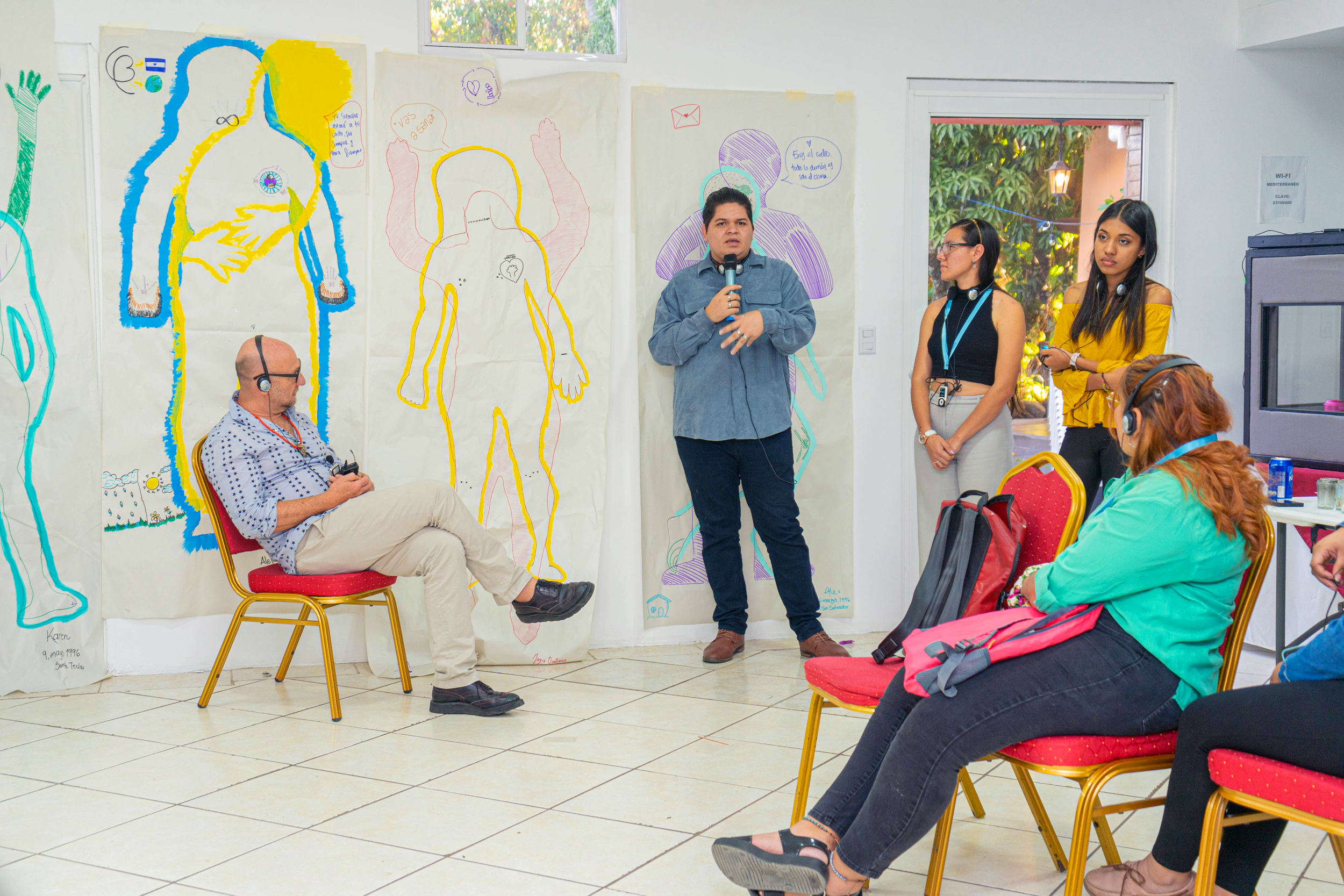
Our method increasingly includes public, participatory art in our international programs. This work explores the connection between the physical body and power in society. The body is not only a place where memories live, but also where stories take shape.
The body often reflects experiences of power, struggle, and history. It holds lived experience and becomes a direct record of personal and collective stories. For this reason, the body is a powerful way to share and perform stories.
The use of body maps in listening and storytelling was inspired by work with the Bambanani Project in South Africa, where women living with HIV created life-sized self-portraits to share their experiences. Body mapping involves tracing the outline of the body and filling it with symbols, colors, and words. This allows people to express what may be hard to say out loud.
This process turns private experiences into shared moments of witness. Shown in clinics, workshops, and galleries, these body maps reveal inner worlds shaped by memory, struggle, and resilience, giving lasting form to stories that might otherwise remain unheard.